TV Lamps, Page One
TV lamps were quite a phenomenon in the '50s and '60s, sparked by a perceived need to soften the contrast between the television screen and a darkened room. But their success, however brief, was perhaps due more to their decorative aspects. These lamps were made in great numbers at Texans Incorporated, and are undoubtedly the products the company is best known for. They are presented here in the approximate order in which they were initially released, but it must be stressed that this is an approximation, as company production records no longer exist. While not foolproof, it appears that the sequence of model numbers closely represents the order in which the lamps were introduced. There could be others, but the thirty-one TV lamp designs shown here are the only ones known.

This A505 panther, clearly the most popular of the eight "pre-Kron" TV lamps, was made by other potteries as well. The source of the original design is unknown.

Not often found in white, this A505 bears the Texans Inc. stamp on the felt base.
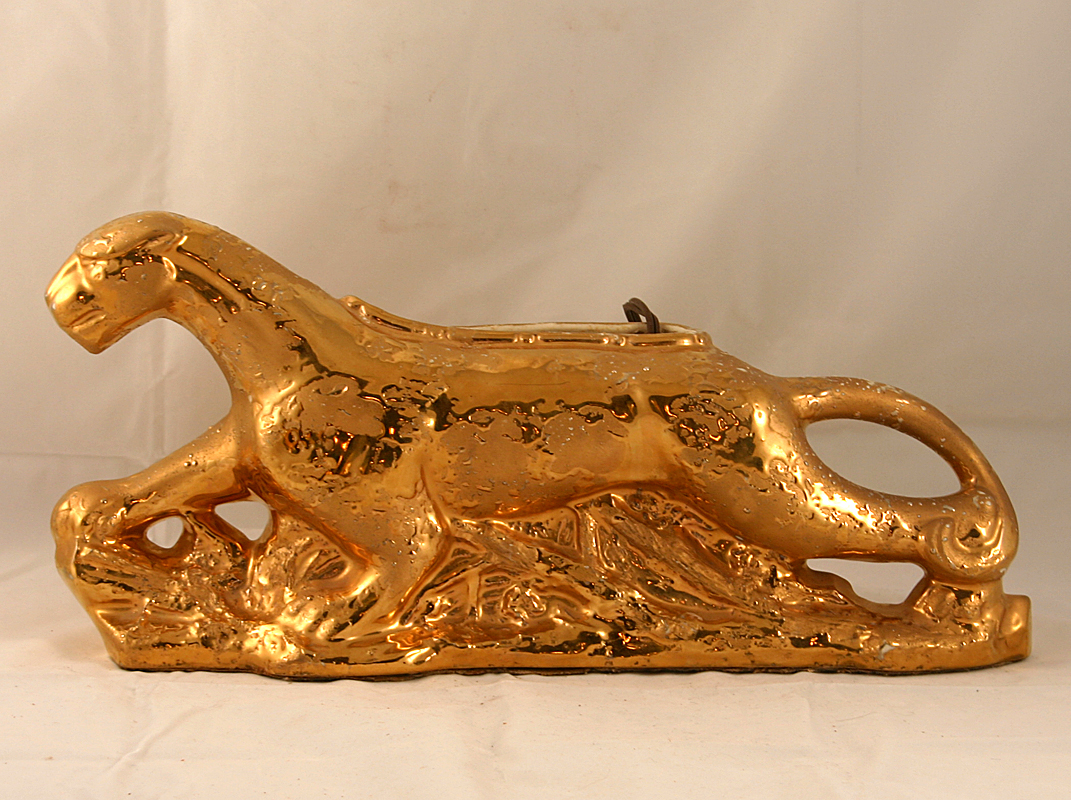
This B10 panther was made in several solid colors and "two tones", all quite rare. This 22k gold version is probably one of a kind.
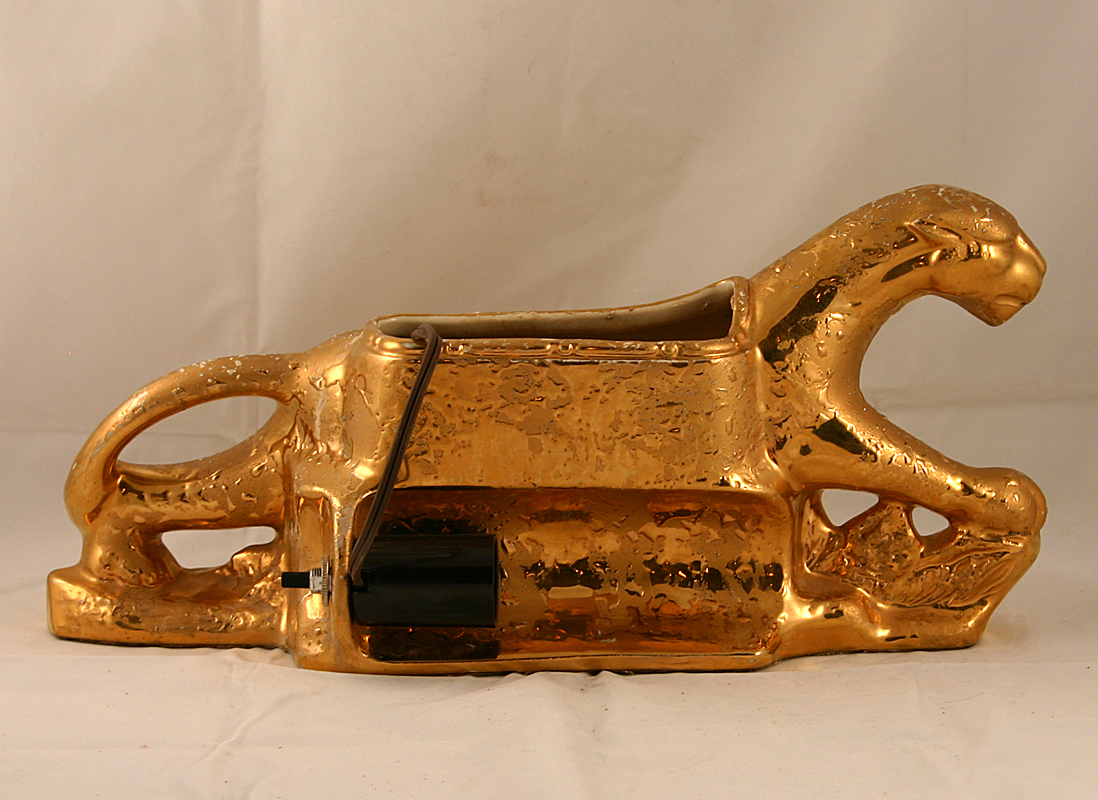
Here's a back view of the gold B10.

The B-21 Planterlite TV Lamp. No confirmed examples are known, but the same design is sometimes found with a Harlaco marking.

A popular early TV lamp, the D12 hunting dog went through many changes, with different openings in the back for light dispersal.

As many as four variations were made, this one being the second or third.
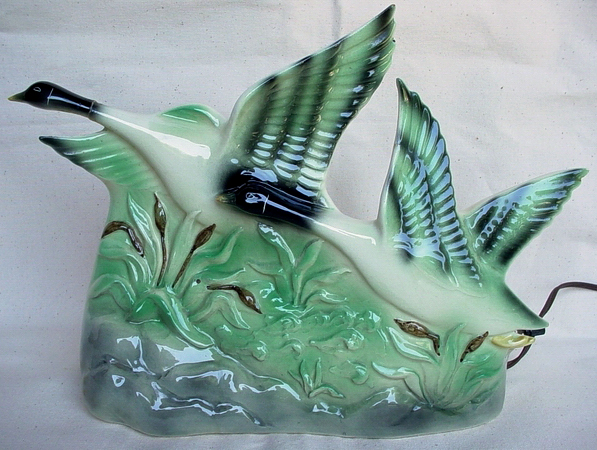
The model D13 hard to find in good condition, as the left-most head is prone to breakage.
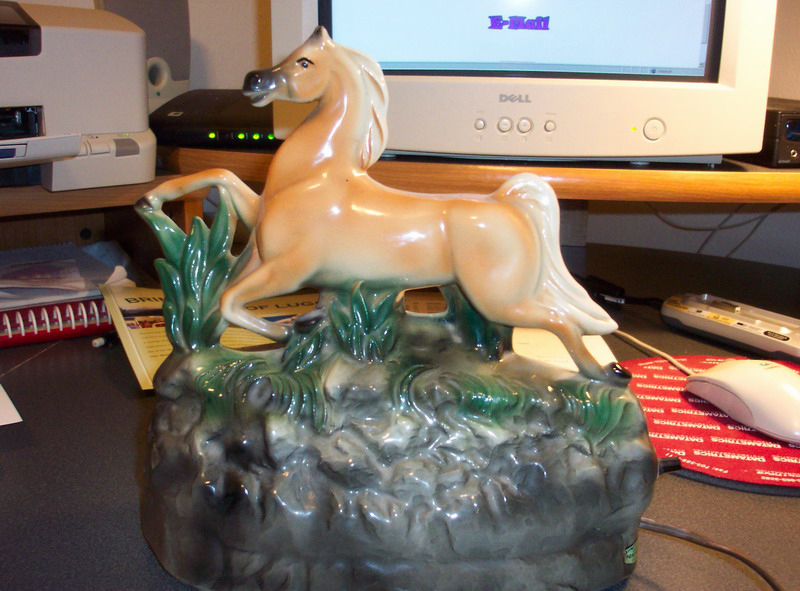
One of the first TV lamps made at Texans, this D19 horse went through a series of subtle design changes.
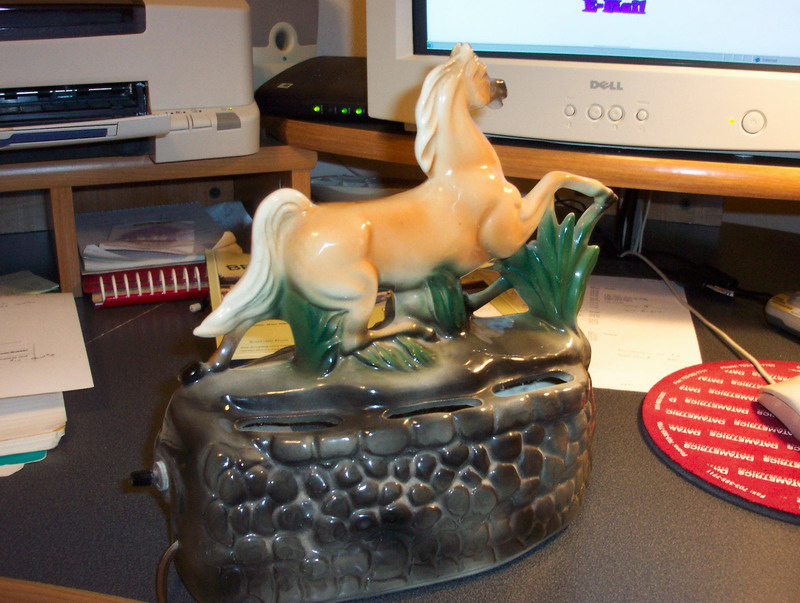
A back view shows this to be what might be called a "stage 1" version, with the light fixture almost completely enclosed.
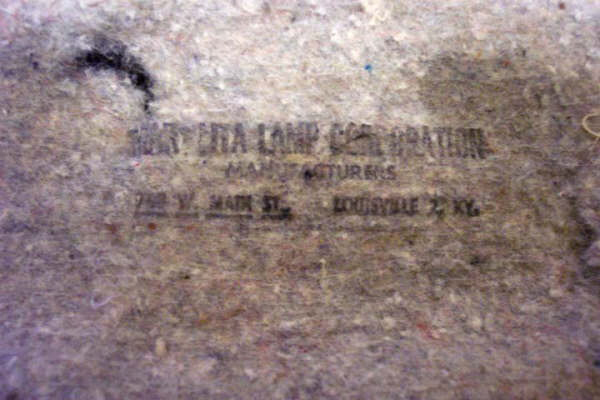
The felt base is marked Mar-Lita, making this a very early example.
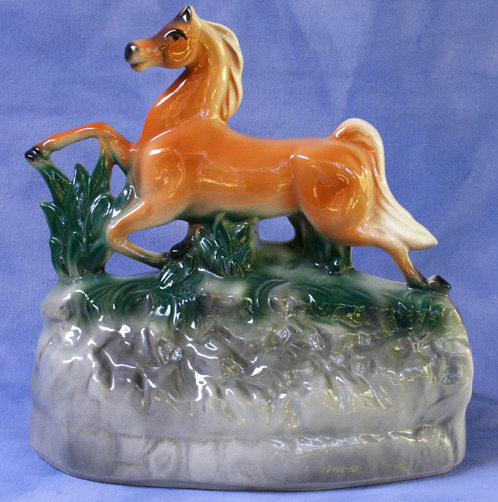
Another example of the trotting horse, the front being identical to the previous lamp.
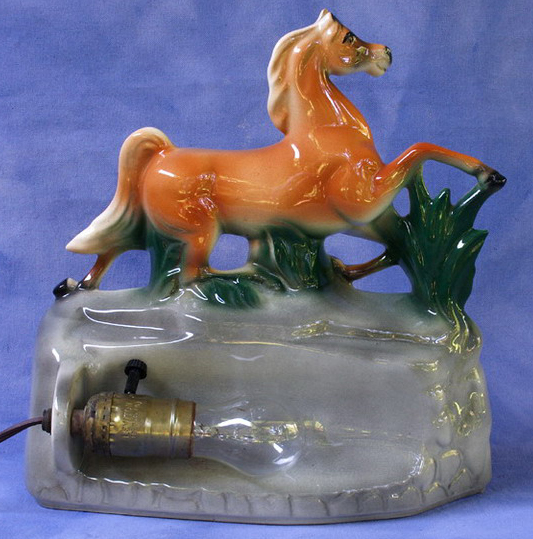
The back shows the difference, as the bulb has been exposed for better illumination.

This G91 sailfish is another early product, and found with several variations of design.
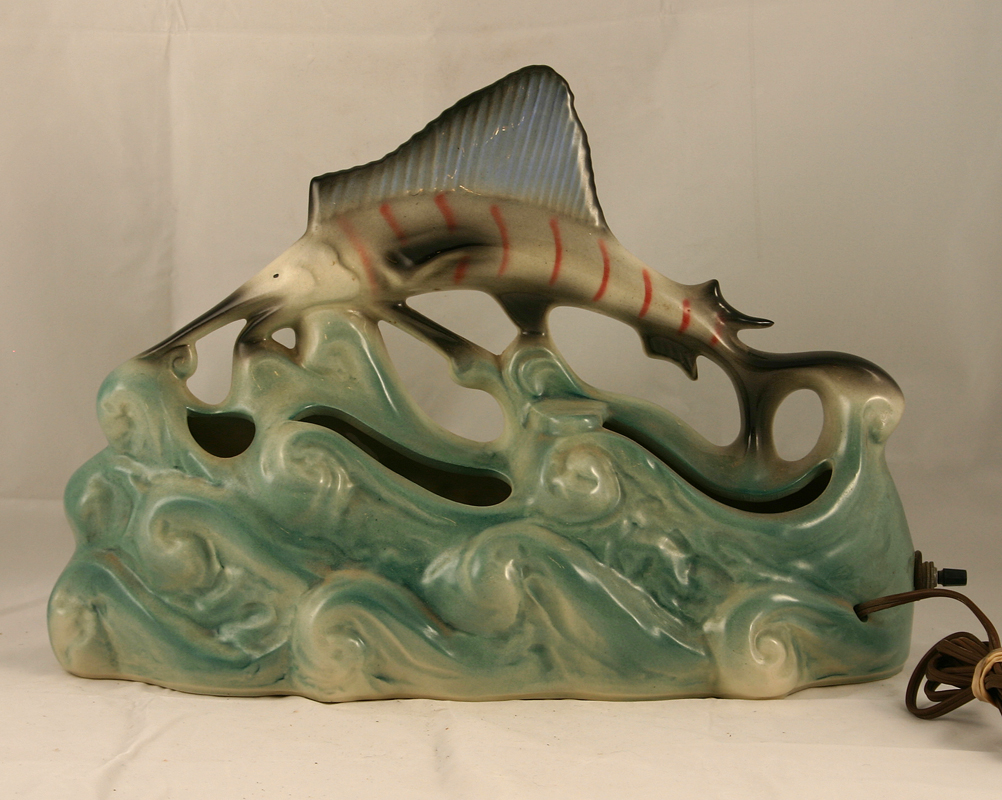
The back shows this to be the first version, as the light escapes through tiny slits.
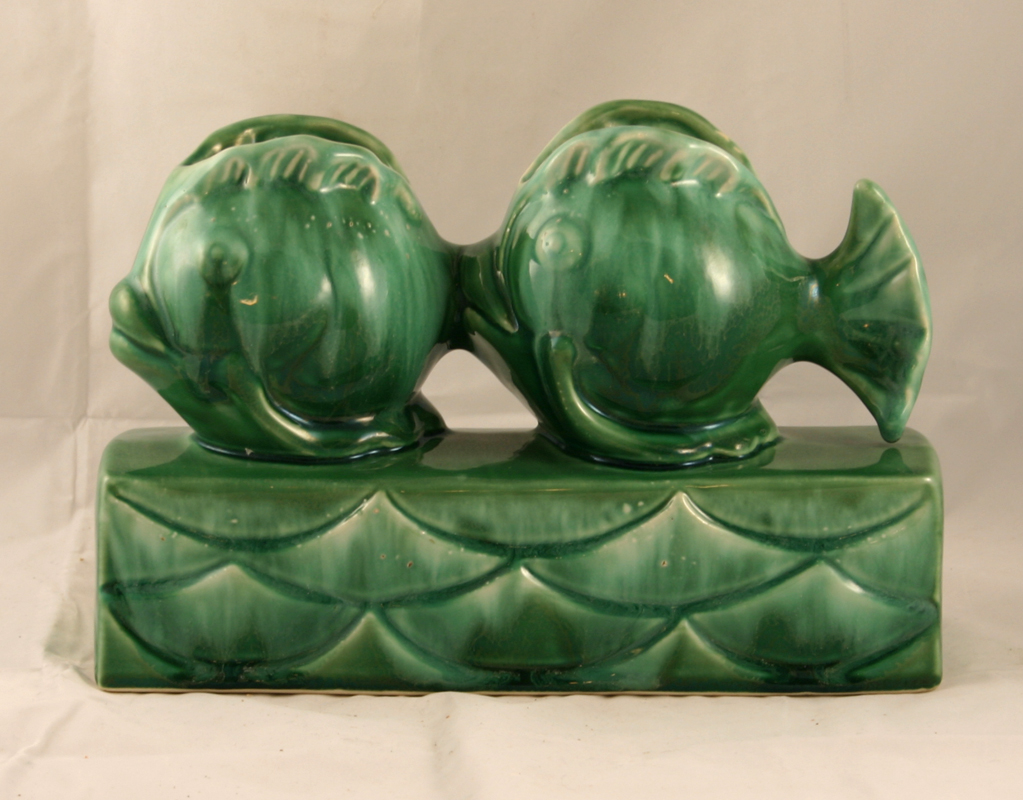
The model T70 was a distinctive design, with an almost identical lamp made by American Art Potteries in Morton, Ill.
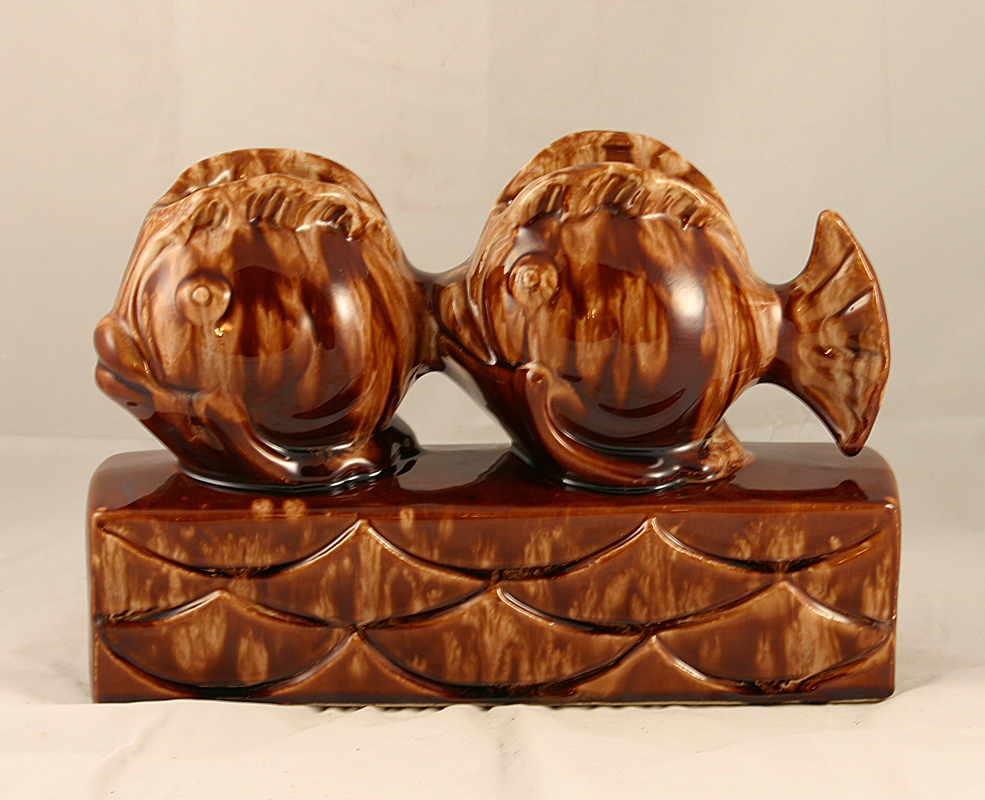
Same model, this one with a beautiful brown drip glaze.

This large Wagon Wheel TV lamp is a great, iconic design, and the only TV lamp created by Texans mold-maker Floyd Thomas.
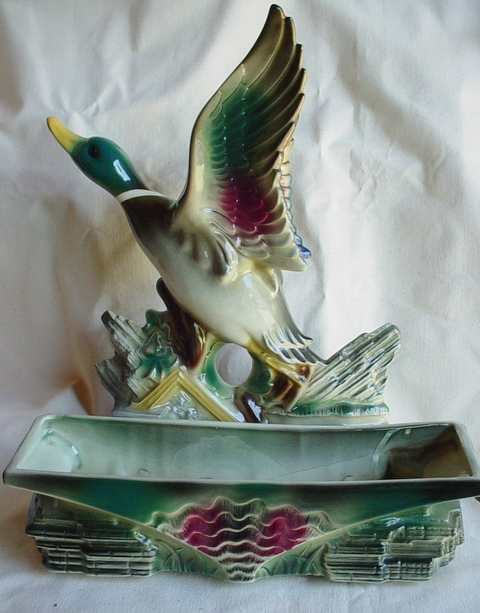
Called the K119 Sportsman, this mallard was the first TV lamp designed by Howard Kron, and heralded the many distinctive products that were to come.
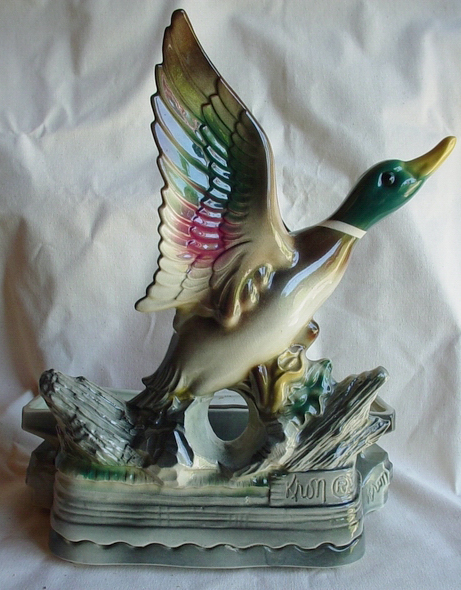
From the back it can be seen where the duck and planter, two separate castings, were fused together during firing.

Each cast piece, the planter and duck, are marked Kron.
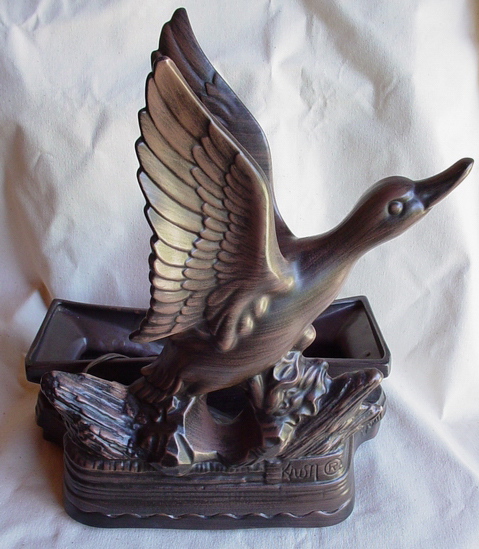
The mallard was also done in a stained finish that was surprisingly effective at simulating woodgrain.

This mallard was finished with a much lighter and warmer variation of the stained finish. Rare.
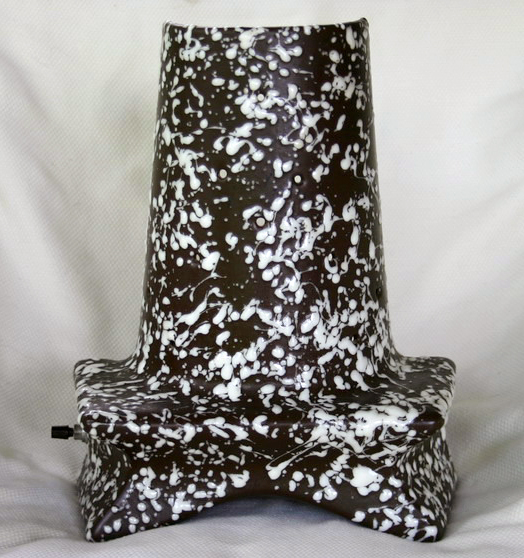
The K135 Modern Flare was a short-lived design, and rare today.

Back view.
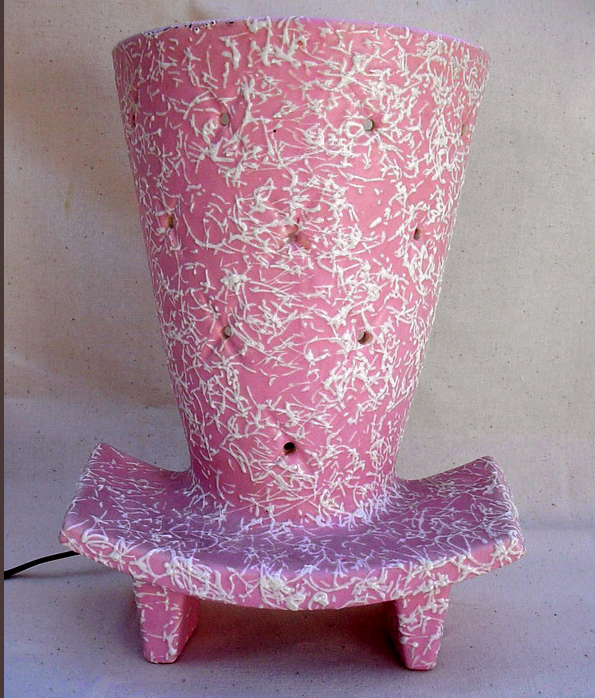
Rather like an abstract version of the comedy-tragedy masks, the curved base of the K136 "Modern Flare" was inspired by the awning of a Dallas building.
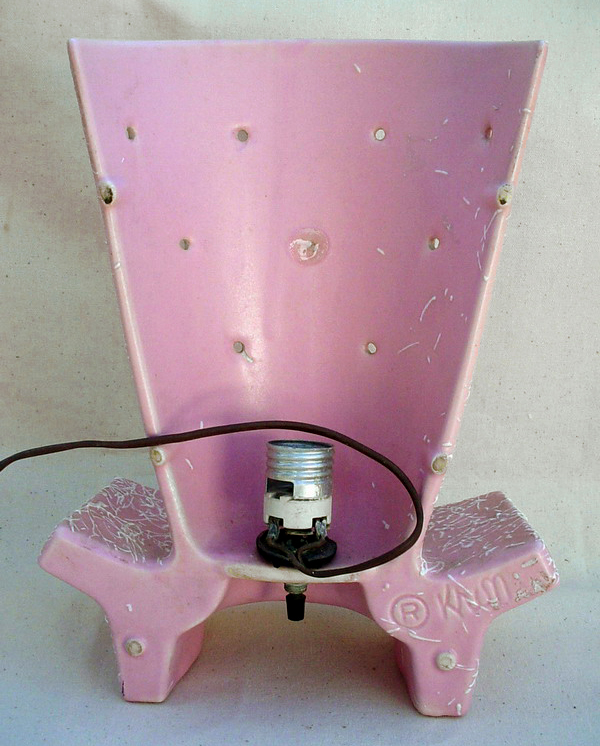
Back view.
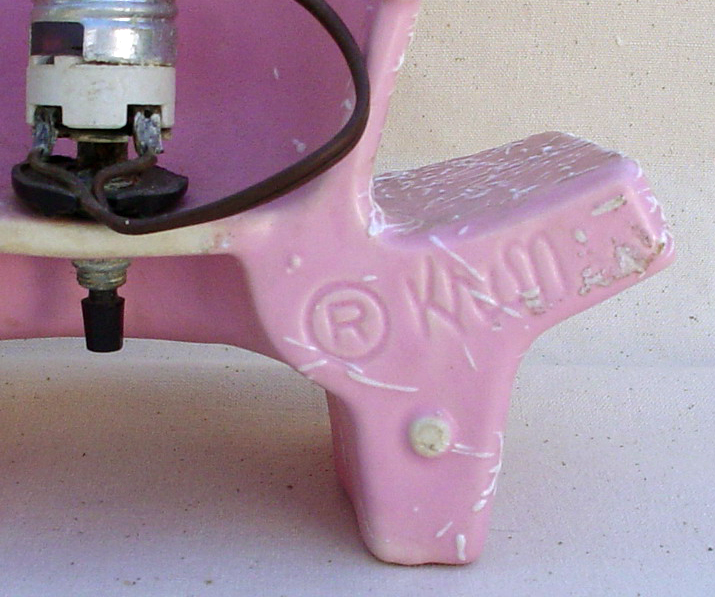
With the exception of some of his Midwest Potteries products, Howard Kron always added his mark.

This K140 Planter Lamp is incomplete, missing the gold animal figurine that would straddle the two points.

There were three different animal figurines to choose from: a deer, a cat, and a pair of birds. No examples of these figurines are known to exist today.

The K144 Comedy-Tragedy lamp was a bold design, and the first product created by Richard Gunter.
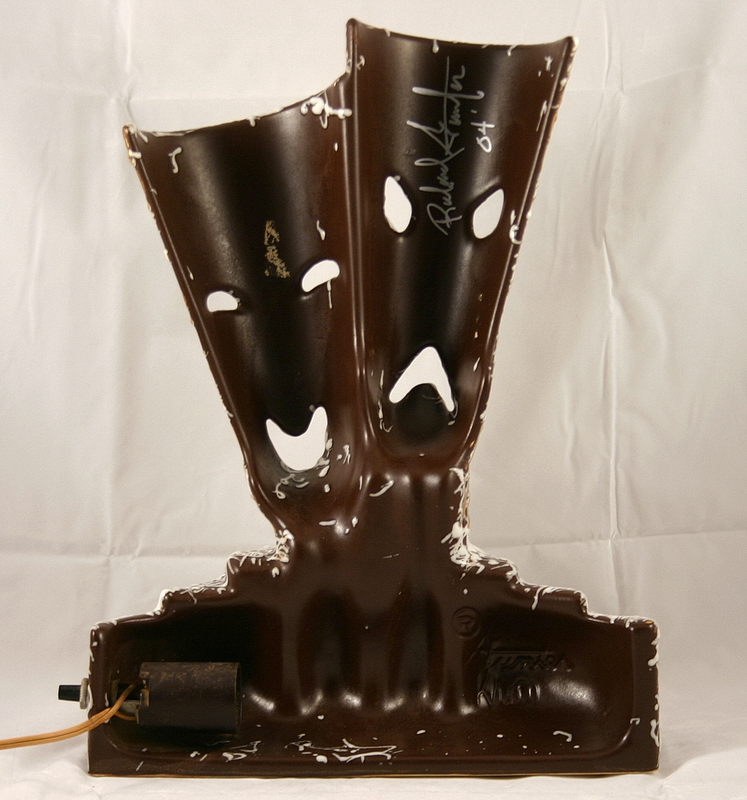
The back shows the ® Gunter Kron marking at the bottom-right.

The comedy-tragedy was available in brown, turquoise or pink, all with the "pebble-tex" finish.
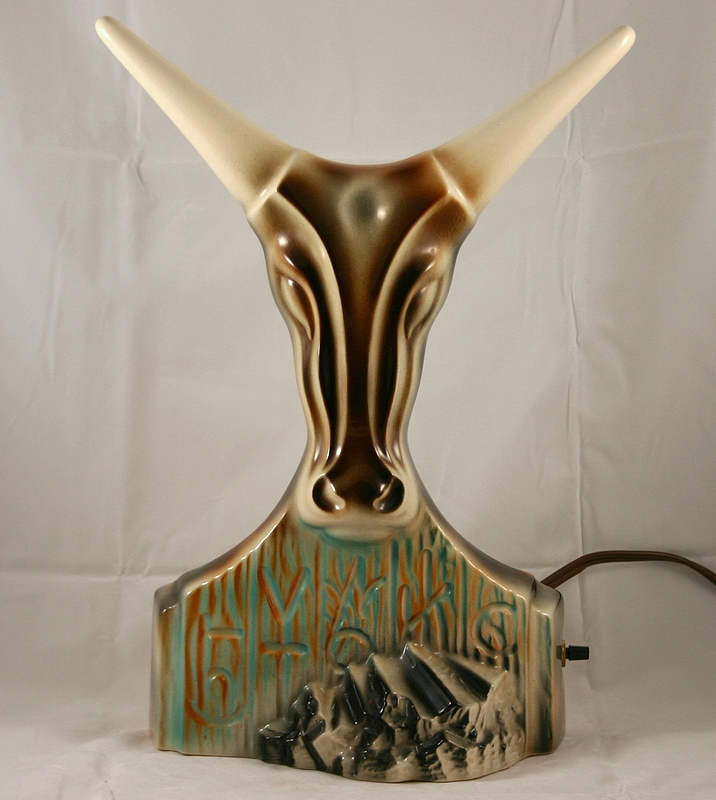
The rare K163 Steer Head TV lamp is a wonderful testament to the skill and imagination of the Kron-Gunter design team.
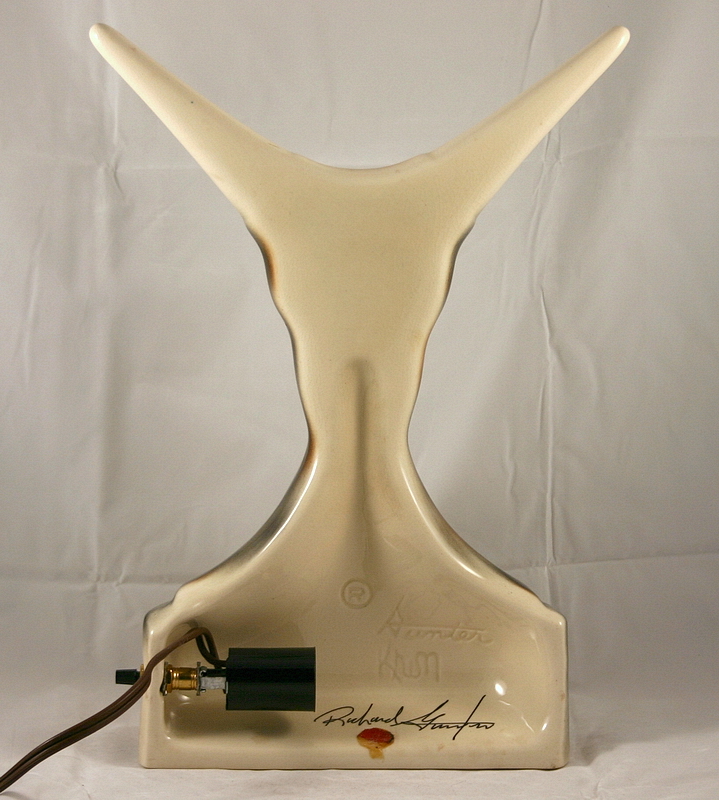
Back view of the steer head TV lamp. An even more rare table lamp variation was also produced.
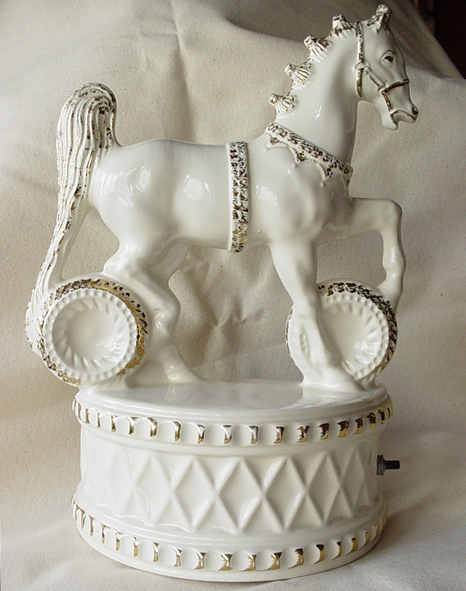
The K176 Circus Horse TV lamp clearly shows Howard Kron's skills as a sculptor, rendering the difficult subject with great accuracy.